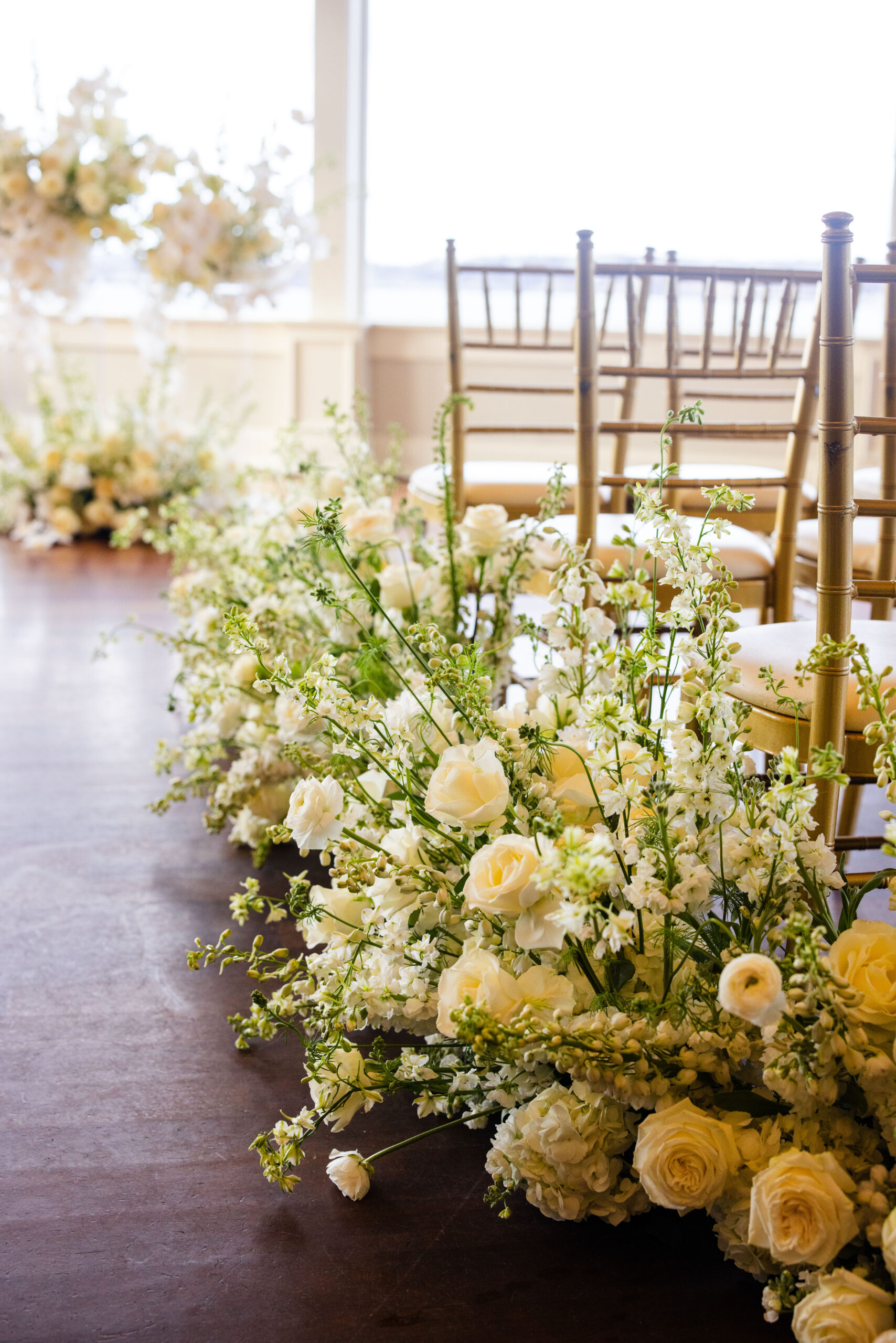
Fullness is not a quantity. It’s a feeling—and it comes from knowing exactly where to put things, not how many things to add.
One of the most common questions I hear from couples planning their reception is some version of this: “How do we make the room feel full without it feeling crowded?”
It’s a genuinely good question. And after designing Newport RI wedding reception flowers for over 400 weddings at venues like OceanCliff, Belle Mer, Rosecliff Mansion, and The Chanler, I can tell you that the answer is almost never “add more.”
What creates fullness in a reception space is intentional layering—combining different heights, textures, light sources, and focal points in a way that gives the eye somewhere to travel at every scale.
This post walks you through exactly how to do that.
Why “Adding More” Doesn’t Work
When a room feels sparse, the instinct is to fill it. More florals on every table. More décor on every surface. More, more, more. But in practice, scattering elements evenly across a space has the opposite effect—everything starts to blend together and nothing registers.
- Same-height centerpieces on every table, all matching
- Florals distributed evenly with no hierarchy or emphasis
- Every surface decorated to the same level of density
- No distinction between focal areas and supporting areas
- Candles added as an afterthought rather than a design layer
- A mix of heights across the room that creates visual rhythm
- Intentional focal moments that anchor the space
- Layered density—rich in key spots, breathing room elsewhere
- Clear hierarchy: sweetheart table, bar, dance floor, guest tables
- Candlelight integrated as a primary design element from the start
Mixing Tall and Low for Visual Dimension
The single most effective tool for creating a full-feeling reception room is variety in centerpiece height. When every table reads the same, the room reads flat. When heights alternate—or when a deliberate mix exists within each table—the eye moves, and the space feels alive.
A sample table arrangement pattern — the alternation creates rhythm and depth across the room.
Tall centerpieces
Elevated arrangements—typically 28 to 36 inches and above—command attention without blocking sightlines at seated eye level. They fill vertical space beautifully, which is especially important in high-ceilinged rooms like OceanCliff’s tented reception or Rosecliff’s ballroom. They signal luxury, and they photograph incredibly well.
Low centerpieces
Low, lush garden-style arrangements create intimacy. They encourage conversation across the table, feel warm and accessible, and give you the opportunity to use incredible textures—dahlias, garden roses, trailing vines, herbs—that would get lost at height. They’re also where you can push color depth and detail most effectively.
At Belle Mer: Because of the venue’s open, coastal aesthetic and sweeping water views, we often keep centerpieces lower and more restrained—letting the natural surroundings do some of the visual work. Rich texture and refined palettes do more here than height ever could.
Using Candles to Create Warmth and Fullness
Candles are one of the most underestimated design tools in wedding reception planning. Couples often treat them as a nice add-on. In reality, candlelight is a design layer—one that fills visual space, adds warmth, and transforms the atmosphere of a room more dramatically than almost any other element.
A reception that is beautifully styled but under-candled will always feel slightly cold. The same room with candlelight woven throughout becomes something you feel.
Tapers
Elegant, vertical, and traditional. Tapers add height at the table level without competing with florals. They cluster beautifully in varying heights and cast a directional warm light.
Pillar Candles
Substantial and warm. Pillars work well as anchors within low centerpieces or as standalone groupings. They create a softly diffuse glow that flatters every face at the table.
Votives & Tea Lights
The connective tissue of candlelit reception design. Scattered across table surfaces, votives fill in the visual gaps and create a sense of warmth even in large rooms with high ceilings.
“The rule I design by: if you think you have enough candles, add 30% more. A room lit by florals alone will always feel like something is missing. A room lit by florals and candlelight together becomes transformative.”
Identifying Your Focal Areas
Not every surface deserves the same level of attention. The secret to a reception that feels full without being overwhelming is investing heavily in a handful of key focal areas—and letting everything else support them.
The Sweetheart or Head Table
This is the most important visual focal point in your reception. Guests’ eyes return to it constantly. A lush installation behind the couple—whether a floral panel, suspended arrangement, or abundant table design—anchors the entire room. Don’t under-invest here.
The Ceremony Entrance & Cocktail Transition
The moment guests walk from cocktail hour into the reception room is a design moment. A statement arrangement at the entrance—or florals flanking the doorway—sets the tone for what they’re walking into. First impressions shape everything that follows.
The Bar
Guests spend real time at the bar—it’s a social hub and a natural gathering point. A well-styled bar with coordinated florals and greenery makes the space feel intentional rather than functional. This is also a prime spot to repurpose ceremony arrangements.
The Dance Floor Perimeter
As the night progresses, the dance floor becomes the heart of the reception. Lining the perimeter with candles, small arrangements, or potted plants creates a sense of enclosure and warmth—making guests feel invited in rather than exposed when they step onto the floor.
How This Comes to Life at Newport’s Top Venues
Every venue has its own character—and the approach to fullness shifts based on the architecture, scale, and natural environment of each space.
OceanCliff
OceanCliff’s tented reception space is the closest thing Newport has to a true blank canvas. The architecture doesn’t do much of the work for you—which means florals and candlelight carry more of the atmospheric load than they do anywhere else.
This is a venue where underinvesting shows immediately. But it’s also where design can truly shine, because there’s nothing competing with it.
- Overhead greenery or floral installations to define the ceiling
- Heavy candlelight throughout—votives, tapers, and pillar groupings
- Alternating tall and low centerpieces to create room-wide rhythm
- Statement florals at the sweetheart table, bar, and entry points
Belle Mer
Belle Mer’s clean, light-filled interior and expansive water views mean the venue brings natural atmosphere—which changes the design equation entirely. Here, the goal is complement, not compete.
Florals that work at OceanCliff might overwhelm Belle Mer. The room rewards restraint, refinement, and a tightly edited palette.
- Lower, garden-style centerpieces in white, green, and soft coastal tones
- Ceremony pieces placed to frame the water view, not obscure it
- Candlelight that adds warmth without heaviness
- Strategic repurposing of ceremony florals to enrich the reception
The Fullness Framework™
Four principles that guide every reception design we create at Plant Girl Floral—regardless of venue, budget, or aesthetic.
Vary Your Heights
Alternate tall and low centerpieces to create rhythm across the room. The eye needs somewhere to travel.
Layer Your Light
Integrate candlelight as a primary design element. It fills visual space and transforms atmosphere in a way florals alone cannot.
Anchor Your Focal Points
Invest most heavily in 3–4 key areas. Let the rest of the room support those moments rather than compete with them.
Resist “More Everywhere”
Fullness comes from contrast and intentional density—not from distributing décor evenly across every surface.
“The receptions that feel the most complete are never the ones with the most flowers. They’re the ones where every single element was placed on purpose.”
— Christine, Plant Girl Floral
Let’s Design a Reception That Feels Exactly Right
If you’re planning a wedding in Newport, Rhode Island—or anywhere along coastal New England—we’d love to talk through your vision and show you what’s possible.
Frequently Asked Questions
How many centerpiece styles should we have at our reception?
Most of our receptions use two or three distinct centerpiece styles—typically a tall statement arrangement, a low garden-style design, and occasionally a mid-height option or candle cluster. The combination creates visual rhythm without the chaos of too many competing aesthetics.
Is it worth investing more in the sweetheart table florals?
Yes—almost always. The sweetheart or head table is the visual anchor of your reception. It’s where guests look most often, and where your photographers will be focused during key moments. A beautifully designed backdrop or lush table arrangement here pays dividends across the entire room.
Can reception florals from the ceremony be repurposed to add fullness?
Absolutely—and this is something we plan for from the start. Ceremony arches, flanking arrangements, and aisle pieces are often moved to the bar, cocktail space, or reception entry as guests transition. It’s one of the most efficient ways to maximize the fullness of your overall design.
What’s the minimum investment for Newport RI wedding reception flowers?
Full-service wedding floral design at Plant Girl Floral begins at $10,000. For most couples seeking a layered, candle-filled reception with multiple focal areas and mixed centerpiece heights, investments typically range from $15,000 to $35,000 depending on guest count, venue, and design scope.
How far in advance should I book a Newport wedding florist?
We recommend reaching out 9 to 12 months in advance—especially for peak season dates between late May and October. Newport’s most iconic venues book quickly, and coordinating florals alongside your venue contract as early as possible ensures full design alignment.

Comments >>