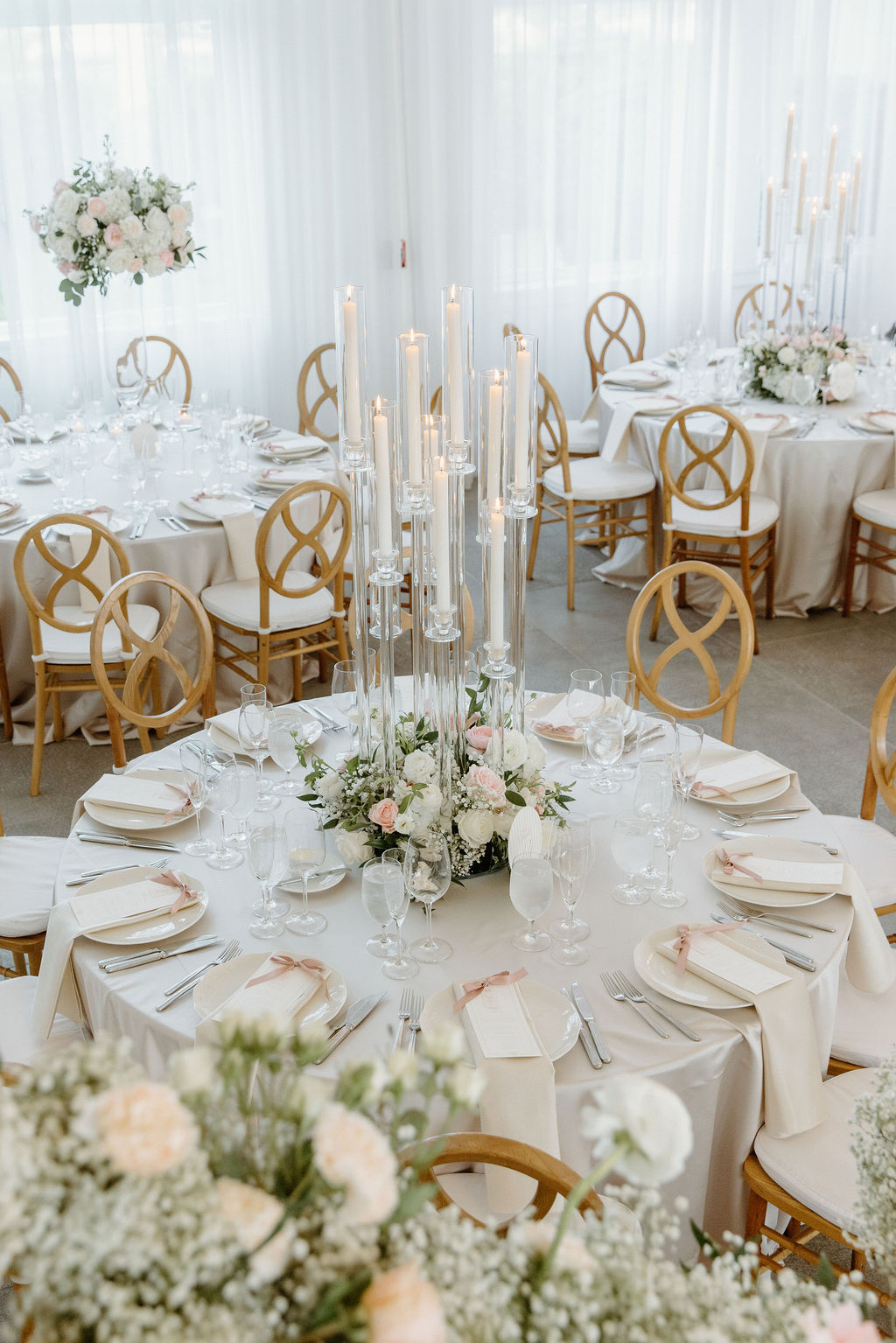
Sustainable & Locally Grown Wedding Flowers: A Newport Couple’s Guide to Eco-Conscious Blooms
How to design a beautiful wedding day around what’s actually growing, in season, close to home.
More couples planning weddings in Newport are asking a version of the same question: can our flowers be gorgeous and thoughtful about where they came from? The honest answer is yes, and it doesn’t require sacrificing the lush, romantic look Newport weddings are known for. Sustainable wedding flowers Newport couples are drawn to usually come down to two things: sourcing locally and seasonally, and designing in a way that doesn’t waste what’s used.
We’ve built more of our own designs around this approach over the past few seasons, partly because New England’s growing calendar is so distinct and partly because couples increasingly want their wedding day to reflect values they hold the rest of the year. Here’s what that actually looks like in practice.
What “Sustainable” Actually Means in Floral Design
The word gets used loosely, so it’s worth being specific. In our studio, it comes down to a few concrete choices: sourcing from regional growers and farms when the season allows it, designing with reusable mechanics like chicken wire and pin frogs instead of single-use floral foam, choosing compostable or reusable vessels, and planning arrangements so very little goes to waste after the event ends.
None of that requires a couple to give up a particular color palette or mood. It just means the palette gets built around what New England’s growing season actually offers at that time of year, rather than a photo pulled from a wedding six states away in a different climate.
Working with New England’s Seasons
Rhode Island’s growing calendar shapes what’s realistically available at any given point in the year, and leaning into that rhythm tends to produce arrangements that feel more alive rather than more limited. Spring brings ranunculus, tulips, and early garden roses; summer opens up into dahlias, sweet peas, and a huge range of garden roses; fall shifts toward richer textures like chrysanthemums, amaranthus, and late-season dahlias; and winter leans on hardy greenery, anemones, and flowers grown in local greenhouses.
— Christine, Founder & Lead Designer, Plant Girl Floral
Sustainable Choices vs. Conventional Choices
It helps to see the two approaches side by side, since the differences are more about process than they are about the final look.
| Element | How It Differs |
|---|---|
| Sourcing | Regional growers and seasonal availability guide the palette, versus sourcing any flower regardless of season or origin. |
| Mechanics | Reusable structures like chicken wire and pin frogs replace single-use floral foam, which doesn’t biodegrade. |
| Vessels | Compostable, reusable, or rented vessels replace disposable containers. |
| After the Event | Flowers are designed to be easily donated, composted, or preserved rather than discarded with hard-to-separate mechanics. |
Is a Fully Sustainable Design Right for Your Wedding?
Most couples land somewhere on a spectrum rather than at one extreme or the other. A helpful starting question: which matters more to you, having a specific flower variety no matter the season, or having a design that feels naturally in step with the time of year and place you’re getting married? There’s no wrong answer, but naming that preference early makes the rest of the planning conversation much easier.
Small Choices That Add Up
- Ask what’s in season: build your mood board around a feeling and a palette rather than specific flower names, and let your florist translate that into what’s actually growing.
- Skip the floral foam: reusable mechanics hold up just as well structurally and avoid a material that doesn’t break down.
- Plan for the flowers’ second life: decide in advance whether arrangements will be donated, composted, or preserved so nothing gets wasted in the moment.
- Choose local over long-distance when you can: regional sourcing reduces the distance (and resources) it takes to get flowers to your venue.
Bringing It to Life on Your Wedding Day
None of this changes how a wedding day actually feels. Guests notice lush, romantic arrangements, a cohesive color story, and thoughtful details — not whether the mechanics behind a centerpiece were reusable. The sustainability lives in the process, which means it can sit quietly underneath a wedding that still looks every bit as elevated as a fully conventional design.
Curious About a More Sustainable Design?
We’d love to talk through what a seasonally minded, thoughtfully sourced floral design could look like for your Newport wedding.
Frequently Asked Questions
Are locally grown wedding flowers more expensive than imported blooms?
Not necessarily. Local, in-season flowers are often more efficient to source than imported blooms flown in from overseas growers, since they skip the cold storage and long-distance shipping that can add cost. The tradeoff is flexibility — a locally rooted design has to work within what’s actually in season rather than any flower a couple can picture.
Can I still get the exact flowers I want if I go the sustainable route?
Usually yes, with some flexibility on variety rather than color or mood. A skilled designer can translate a Pinterest-inspired look into whatever’s growing locally that season — a garden rose in September reads very differently than one forced into bloom in January, and matching the design to the season tends to produce a more natural, less rigid result anyway.
What happens to the flowers after a sustainably designed wedding?
Because sustainable design already favors compostable mechanics over floral foam and single-use plastic, the flowers themselves are easier to repurpose afterward — donated to a local charity, composted, or dried and preserved — without wrestling with foam or wire first.
How far in advance should we talk to our florist about a sustainable design?
As early as possible, ideally at the same time you’re settling on a date and venue. Sourcing decisions and seasonal planning are easiest to build in from the very first design conversation rather than layered on after a mood board is already set.
Comments >>